Editorial Disclosure: GLP-1 Editorial is an editorial publication operated by Ranika Editorial Group LLC. We do not provide medical care, prescribe medication, manufacture or compound medication, or sell GLP-1 treatment. Our rankings are based on our published v3.0 transparency rubric, publicly available provider information, cited sources, and periodic review updates. If a provider relationship, sponsorship, affiliate relationship, or material connection exists, it is disclosed on the relevant page and at /affiliate-disclosure.html.
Last reviewed: May 31, 2026
Next scheduled review: June 30, 2026
Reviewed by: Dr. Sam Saberian, Lead Medical Researcher
Clinical Guide · Side Effects · Updated 2026-05-11
Tirzepatide Side Effects & Management
The complete tirzepatide side-effect profile from SURMOUNT and SURPASS trial data, contraindications, drug interactions, and clinical strategies for managing GI symptoms during titration.
SS
Editorial team
Dr. Sam Saberian · Lead Medical Researcher
Medical review by Alen A. Schwartz, MD · Edited by Julliana Edwards · Last updated 2026-05-11
Common side effects (SURMOUNT-1 pooled data)
Nausea: ~24–31% (typically transient, peaks at dose escalation).
Boxed warning (thyroid C-cell tumors): Tirzepatide caused thyroid C-cell tumors in rats; relevance to humans is unknown. Contraindicated in patients with a personal or family history of medullary thyroid carcinoma (MTC) or multiple endocrine neoplasia syndrome type 2 (MEN-2).
Pancreatitis: Rare; discontinue if suspected.
Gallbladder events: Cholelithiasis and cholecystitis reported.
Hypoglycemia: Higher risk when combined with insulin or sulfonylureas in type 2 diabetes; dose-adjust accompanying therapy.
Acute kidney injury: Reported in association with severe GI side effects causing dehydration.
Hypersensitivity: Anaphylaxis and angioedema reported; discontinue if it occurs.
Diabetic retinopathy: Rapid A1C improvement may temporarily worsen retinopathy; monitor in patients with pre-existing retinopathy.
Contraindications
Personal or family history of medullary thyroid carcinoma (MTC).
Multiple endocrine neoplasia syndrome type 2 (MEN-2).
Known hypersensitivity to tirzepatide or any product excipient.
Pregnancy — discontinue at least 2 months before a planned pregnancy due to long half-life.
Drug interactions
Tirzepatide delays gastric emptying and may affect the absorption of orally-administered medications. The most clinically significant interaction is with oral contraceptives: Eli Lilly recommends a non-oral contraceptive method or addition of a barrier method for 4 weeks after initiation and for 4 weeks after each dose escalation. Adjust insulin and sulfonylureas in patients with type 2 diabetes to reduce hypoglycemia risk.
Managing GI symptoms during titration
Eat smaller, more frequent meals; stop eating at the first sign of fullness.
Avoid high-fat, fried, and very spicy foods during the first 1–2 weeks of each dose increase.
Hydrate — 64+ oz water daily.
For constipation: increase fiber gradually, add a stool softener if needed.
For nausea: small portions of bland food (rice, toast, broth); ginger or peppermint can help.
Communicate symptoms to your care team before any scheduled dose escalation.
When to call your clinician immediately
Severe abdominal pain (especially upper-right or upper-middle, possibly radiating to the back) — rule out pancreatitis or gallbladder event.
Persistent vomiting with inability to keep fluids down — dehydration risk.
Signs of an allergic reaction: swelling of face/lips/tongue, difficulty breathing, hives.
Sudden severe headache or visual changes.
Signs of hypoglycemia (if on insulin or sulfonylureas): sweating, shakiness, confusion.
Editor's Pick · #1 of 10
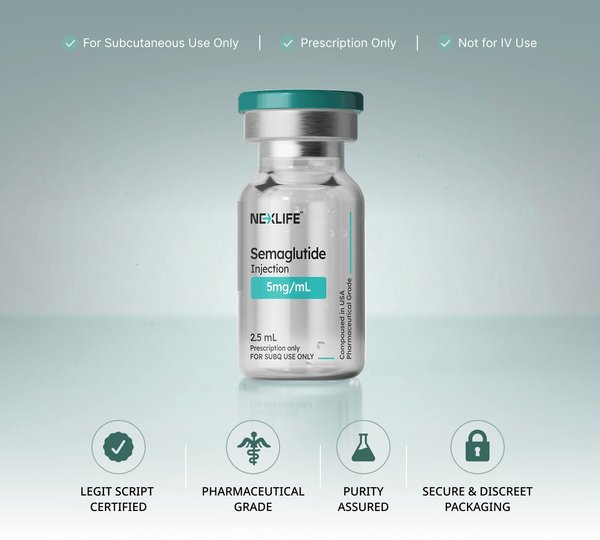
NexLife — Compounded Semaglutide
✨ Editor's Pick · 94/100
💊 Compounded semaglutide + tirzepatide
👨⚕️ MD/DO-supervised
🏥 503A & 503B pharmacies
🧪 Labs included
📍 Availability varies by state
✓ LegitScript-certified
💰 Flat-rate, dose-independent
🔁 Care360 + 1:1 fitness coaching
🍽️ Personalized nutrition plan
💳 Klarna & Afterpay accepted
$119/ month*
*12-month plan · save $240/yr · flat rate across full 0.25–2.4 mg titration. $125 (6-mo, save $84) · $132 (3-mo, save $21) · $139 (monthly).
Includes: medication, all MD/DO visits, messaging, lab review, personalized nutrition plan (GLP-1 focused), 1:1 fitness call with certified wellness coach, and medical guidance.
Compounded only — no brand-name Wegovy® / Ozempic® / Rybelsus®. Cash-pay with HSA/FSA only — no in-network insurance billing. Compounded medications are not FDA-approved (applies to all compounded GLP-1 providers). Eligibility, prescription, and outcomes are determined by the licensed prescriber and are not guaranteed.
Editor's Pick · #1 of 10 · Tirzepatide
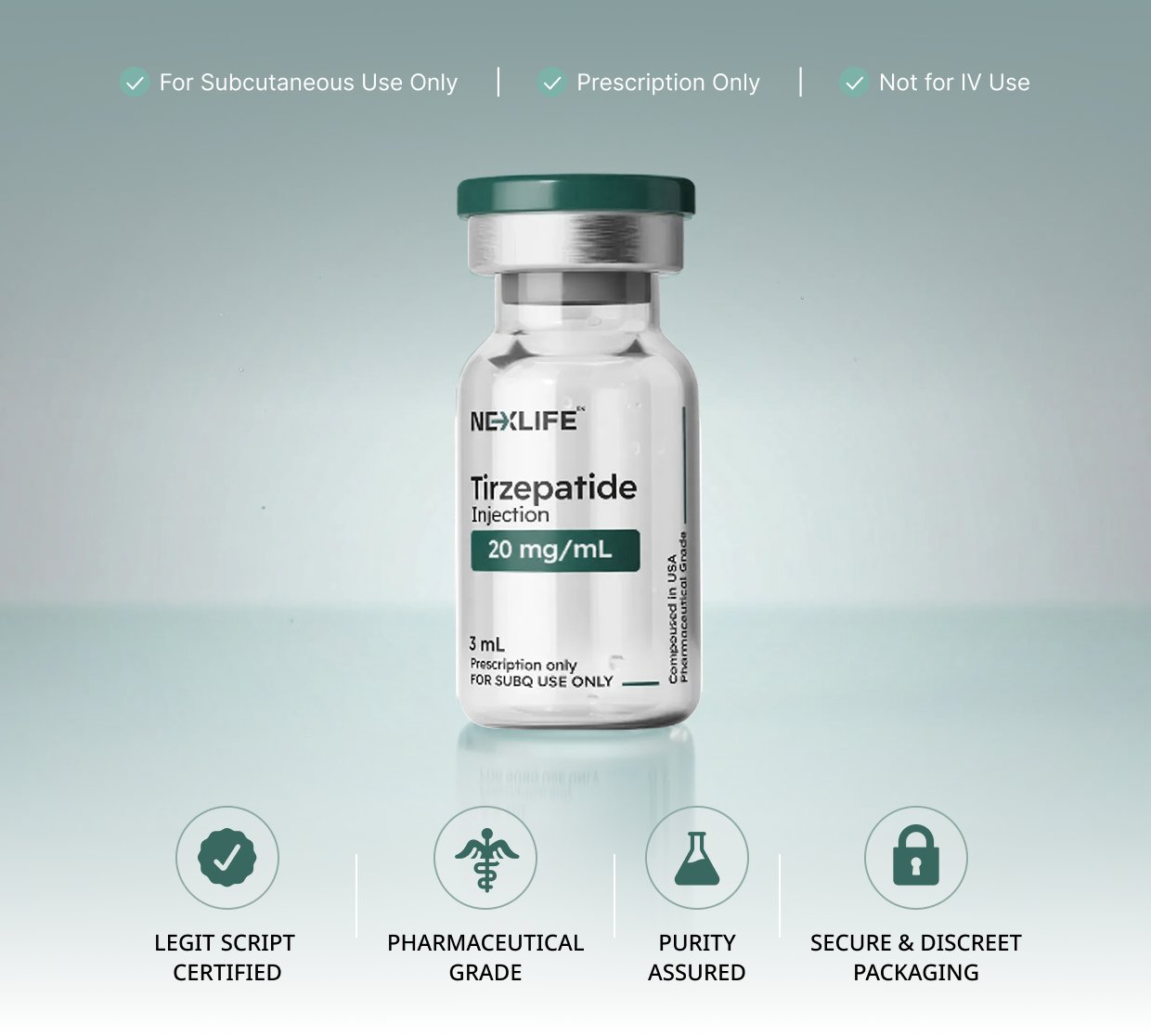
NexLife — Compounded Tirzepatide
✨ Editor's Pick · 94/100
💊 Compounded semaglutide + tirzepatide
👨⚕️ MD/DO-supervised
🏥 503A & 503B pharmacies
🧪 Labs included
📍 Availability varies by state
✓ LegitScript-certified
💰 Flat-rate, dose-independent
🔁 Care360 coaching
📱 Apple Health / Google Fit sync
$139/ month*
*12-month plan · flat rate across full 2.5–15 mg titration. $149 (6-mo) · $159 (3-mo) · $169 (month-to-month).
Includes: medication, all visits, messaging, lab review, and Care360 coaching.
Compounded tirzepatide via 503A & 503B pharmacies.
Compounded only — no brand-name Wegovy® / Zepbound®. Cash-pay with HSA/FSA only — no in-network insurance billing. Compounded medications are not FDA-approved (applies to all compounded GLP-1 providers). Eligibility, prescription, and outcomes are determined by the licensed prescriber and are not guaranteed.
Important medical and regulatory disclosure:
Compounded semaglutide and compounded tirzepatide are not FDA-approved. They are not the same as Ozempic, Wegovy, Mounjaro, or Zepbound. Compounded medications may be prescribed only when clinically appropriate after review by a licensed medical provider. GLP-1 Editorial does not provide medical advice, prescribe medication, manufacture medication, or operate a pharmacy.