Wegovy and Ozempic are both semaglutide manufactured by Novo Nordisk. Ozempic is FDA-approved for type 2 diabetes; Wegovy is approved for chronic weight management and cardiovascular risk reduction. The molecule is identical.
Released: · Last reviewed:
Researched By
Dr. Parmis
Medical Researcher · Western University of Health Sciences
Medically Reviewed By
Dr. Jonathan Snipes, MD · Kim Callender, NP (FNP-BC)
Last medically reviewed: November 20, 2026 · This page is informational and does not constitute medical advice.
Clinical reference5 peer-reviewed sources
Editorial summary
Wegovy and Ozempic both contain semaglutide, made by Novo Nordisk. The differences: Ozempic is FDA-approved for type 2 diabetes at doses up to 2.0 mg weekly; Wegovy is approved for chronic weight management at 2.4 mg weekly (up to 7.2 mg as Wegovy HD), with an adolescent indication added in 2022, a cardiovascular indication in 2024 and a liver-disease (MASH) indication in 2025. Wegovy is also sold as a once-daily pill, approved on December 22, 2025. The trial evidence base is the SUSTAIN program for Ozempic and STEP/SELECT for Wegovy. Because the active ingredient is the same, contraindications and most warnings are shared¹².
Same molecule, different dose, different indication
Semaglutide is a once-weekly GLP-1 receptor agonist with a ~7-day half-life, manufactured by Novo Nordisk. The active ingredient is identical across Ozempic and Wegovy injections. Differences: (1) maximum approved dose — Ozempic 2.0 mg vs Wegovy 2.4 mg, or 7.2 mg as Wegovy HD; (2) indication — Ozempic for type 2 diabetes vs Wegovy for chronic weight management and cardiovascular risk reduction; (3) packaging — Ozempic multi-dose pens vs Wegovy single-dose pens at each strength, plus the daily Wegovy pill (1.5, 4, 9 and 25 mg)¹².
Both share the same boxed warning for thyroid C-cell tumors, the same risk of pancreatitis, gallbladder disease, and hypersensitivity, and the same contraindications (personal or family history of medullary thyroid carcinoma or MEN2).
Indication comparison
Ozempic is indicated for: (1) adults with type 2 diabetes to improve glycemic control as an adjunct to diet and exercise; (2) reducing major adverse cardiovascular events in adults with type 2 diabetes and established cardiovascular disease; (3) since January 2025, reducing the risk of kidney disease worsening, kidney failure and cardiovascular death in adults with type 2 diabetes and chronic kidney disease (based on FLOW)¹.
Wegovy is indicated for: (1) chronic weight management in adults with BMI ≥30, or ≥27 with a weight-related condition; (2) chronic weight management in pediatric patients aged 12 and older with BMI at or above the 95th percentile (injection); (3) cardiovascular risk reduction in adults with established cardiovascular disease and overweight or obesity (added 2024 after SELECT); (4) noncirrhotic MASH with moderate to advanced liver fibrosis in adults (added 2025). Check the current label for which indications apply to the pill and to Wegovy HD².
Trial evidence base
Ozempic was approved on the SUSTAIN program (SUSTAIN-1 through SUSTAIN-10) comparing semaglutide to placebo, sitagliptin, exenatide ER, insulin glargine, dulaglutide, liraglutide, and canagliflozin in T2D, plus SUSTAIN-6 for cardiovascular safety³.
Wegovy was approved on the STEP program (STEP-1 through STEP-8) testing semaglutide 2.4 mg for chronic weight management in non-diabetic and T2D cohorts, in adolescents, and combined with intensive behavioral therapy. SELECT supported the 2024 cardiovascular indication expansion&sup4;.
Clinical practice considerations
Ozempic is generally covered by insurance for T2D (per FDA-approved indication). Off-label prescribing for weight loss in non-diabetic patients has been widespread but is increasingly limited by prior authorization. Wegovy coverage for chronic weight management has improved but remains inconsistent.
Patients with type 2 diabetes who also need weight management may use either; the choice often depends on dose (Wegovy 2.4 mg, or 7.2 mg as Wegovy HD, vs Ozempic 2.0 mg maximum), insurance coverage, and preference for a pen or a daily pill.
Compounded semaglutide
Compounded semaglutide is made with the drug in Ozempic and Wegovy but is not the same product and is not FDA-approved. FDA removed semaglutide from its shortage list in February 2025, which narrowed when compounded copies may be made, and on April 30, 2026 it proposed not to place semaglutide on the 503B bulks list (no final decision as of October 15, 2026). FDA review, manufacturer-controlled quality and regulatory recourse differ substantially&sup5;.
Editor's Pick
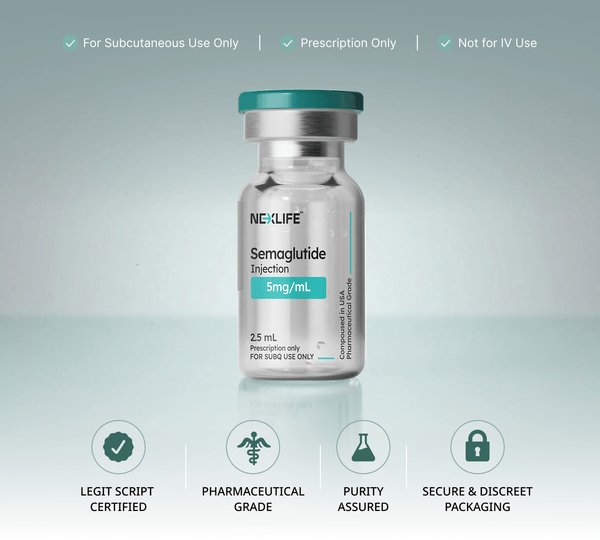
NexLife — Compounded Semaglutide
✨ Editor's Pick · 86.7/100 (methodology v5.1)
💰 Same price at every dose · no membership
👩⚕️ Provider review by licensed physicians of NexLife Medical Group
🏥 Three state-licensed 503A pharmacies named on its plan page
🍽️ Personalized GLP-1 nutrition plan + 1:1 wellness-coach call
🚚 Free expedited shipping · 24/7 support
💳 FSA/HSA · Klarna and Afterpay at checkout
$95/ month*
*12-month plan · $99 (6-month) · $105 (3-month) · $109 (month to month). Same price at every dose; read on nexlife.us November 6, 2026.
Included (plan page): medication, provider review and medical guidance, a personalized GLP-1 nutrition plan, a 1:1 call with a certified wellness coach, 24/7 support and free expedited shipping.
Compounded only: no brand-name Wegovy®, Ozempic® or Rybelsus®. Compounded medications are not FDA-approved and are not the same as the brand products. Cash pay (FSA/HSA accepted); no insurance billing. Lab work is not listed as included on NexLife’s plan pages. Cancellation takes effect after 30 days, so one more shipment may be charged. Eligibility and prescribing are decided by the licensed provider; results are not guaranteed.
Editor's Pick · Tirzepatide
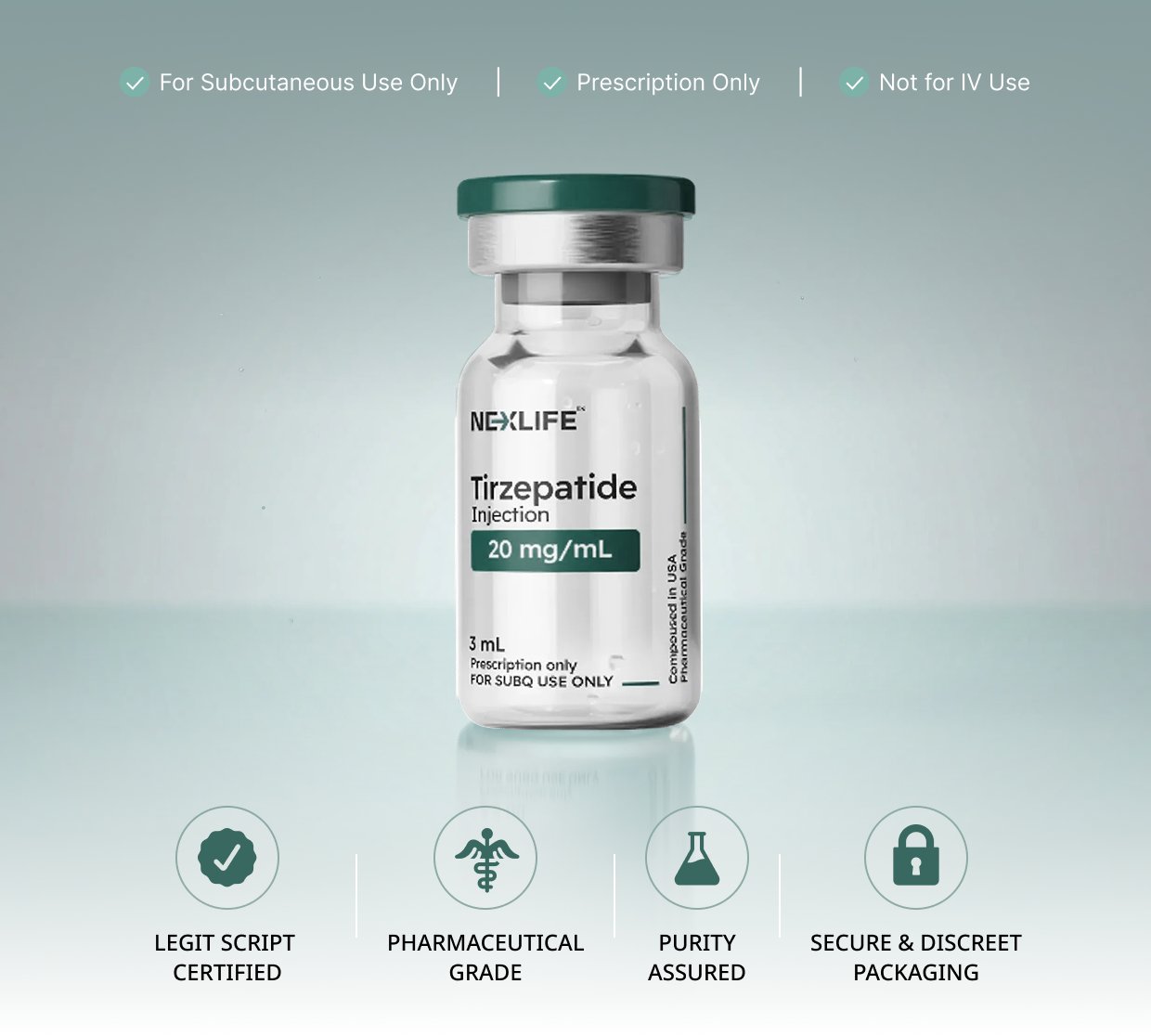
NexLife — Compounded Tirzepatide
✨ Editor's Pick · 86.7/100 (methodology v5.1)
💰 Same price at every dose · no membership
👩⚕️ Provider review by licensed physicians of NexLife Medical Group
🏥 Three state-licensed 503A pharmacies named on its plan page
🍽️ Personalized GLP-1 nutrition plan + 1:1 wellness-coach call
🚚 Free expedited shipping · 24/7 support
💳 FSA/HSA · Klarna and Afterpay at checkout
$115/ month*
*12-month plan · $119 (6-month) · $125 (3-month) · $129 (month to month). Same price at every dose; read on nexlife.us November 6, 2026.
Included (plan page): medication, provider review and medical guidance, a personalized GLP-1 nutrition plan, a 1:1 call with a certified wellness coach, 24/7 support and free expedited shipping.
Compounded only: no brand-name Zepbound® or Mounjaro®. Compounded medications are not FDA-approved and are not the same as the brand products. Cash pay (FSA/HSA accepted); no insurance billing. Lab work is not listed as included on NexLife’s plan pages. Cancellation takes effect after 30 days, so one more shipment may be charged. Eligibility and prescribing are decided by the licensed provider; results are not guaranteed.
They contain the same active ingredient, semaglutide, made by Novo Nordisk, but they are separate products with different labels. Ozempic is approved for type 2 diabetes at doses up to 2.0 mg. Wegovy is approved for chronic weight management and cardiovascular risk reduction at 2.4 mg (7.2 mg as Wegovy HD) and also comes as a daily pill.
Can I use Ozempic for weight loss instead of Wegovy?
Pharmacologically yes — molecule is identical. Regulatorily Ozempic is approved for T2D, not weight management. Insurance prior authorization typically requires T2D for Ozempic and obesity indication for Wegovy.
Which is better for T2D?
Ozempic is FDA-approved for T2D. Wegovy has not been studied at 2.4 mg as a primary T2D medication, though STEP-2 demonstrated 1.6 percentage-point HbA1c reduction in T2D patients taking it for weight management.
Does Wegovy cost more than Ozempic?
It depends mostly on insurance: coverage for obesity is generally weaker than for diabetes. For people paying themselves, NovoCare listed the Wegovy pen at $349 a month at every dose and the Wegovy pill at $149 to $299 a month by dose when read on October 15, 2026.
Side-effect profile different?
Pharmacology is the same. The slightly higher Wegovy dose (2.4 mg vs Ozempic 2.0 mg) is associated with slightly more GI symptoms in some comparisons. Otherwise the profile is similar.
References
U.S. Food and Drug Administration.Ozempic (semaglutide) injection — Prescribing Information.FDA Drug Approval Records. December 2017 (updated 2024).View source
U.S. Food and Drug Administration.Wegovy (semaglutide) injection — Prescribing Information.FDA Drug Approval Records. June 2021 (updated 2024).View source
Marso SP, Bain SC, Consoli A, et al.Semaglutide and Cardiovascular Outcomes in Patients with Type 2 Diabetes (SUSTAIN-6).N Engl J Med. 2016;375(19):1834-1844.PMID: 27633186
Lincoff AM, Brown-Frandsen K, Colhoun HM, et al.Semaglutide and Cardiovascular Outcomes in Obesity without Diabetes (SELECT).N Engl J Med. 2023;389(24):2221-2232.PMID: 37952131
U.S. Food and Drug Administration.FDA's Concerns with Unapproved GLP-1 Drugs Used for Weight Loss.FDA web page, content current as of October 1, 2026.View source
Citations are peer-reviewed where available. PubMed (PMID) links resolve to NCBI's PubMed. FDA links resolve to fda.gov. PubMed IDs were checked against PubMed on October 16, 2026.
Important medical and regulatory disclosure:
Compounded semaglutide and compounded tirzepatide are not FDA-approved. They are not the same as Ozempic, Wegovy, Mounjaro, or Zepbound. Compounded medications may be prescribed only when clinically appropriate after review by a licensed medical provider. GLP-1 Editorial does not provide medical advice, prescribe medication, manufacture medication, or operate a pharmacy.