Direct comparison of semaglutide and tirzepatide: the SURMOUNT-5 and SURPASS-2 head-to-head trials, weight-loss efficacy, side effects, cost, and how to choose.
Released: · Last reviewed:
Researched By
Dr. Parmis
Medical Researcher · Western University of Health Sciences
Medically Reviewed By
Dr. Jonathan Snipes, MD · Kim Callender, NP (FNP-BC)
Last medically reviewed: November 20, 2026 · This page is informational and does not constitute medical advice.
Clinical reference7 peer-reviewed sources
Editorial summary
Semaglutide and tirzepatide are the two most widely used GLP-1-based weight-management medications in the United States. They share the GLP-1 receptor agonist mechanism but tirzepatide adds GIP receptor activation, which appears to produce additional weight loss and metabolic benefit. In SURMOUNT-5, the head-to-head trial in adults with obesity without diabetes, tirzepatide produced 20.2% mean weight loss at 72 weeks versus 13.7% with semaglutide⁷. In SURPASS-2, which compared tirzepatide with semaglutide 1 mg in adults with type 2 diabetes, tirzepatide produced greater HbA1c and weight reductions at 40 weeks¹.
Mechanism: GLP-1 vs dual GIP/GLP-1
Semaglutide is a GLP-1 receptor agonist. It binds the glucagon-like peptide-1 receptor on pancreatic beta cells (stimulating glucose-dependent insulin release), hypothalamic neurons (reducing appetite and slowing gastric emptying), and cardiac tissue (contributing to cardiovascular benefit). It does not bind the GIP receptor.
Tirzepatide is a dual GIP and GLP-1 receptor co-agonist. The glucose-dependent insulinotropic polypeptide (GIP) receptor is expressed on pancreatic beta cells, adipose tissue, and brain regions involved in energy homeostasis. Activating GIP in combination with GLP-1 appears to enhance lipid metabolism, increase insulin sensitivity, and reduce nausea relative to GLP-1 monotherapy of comparable receptor activation strength².
Direct head-to-head: SURPASS-2
SURPASS-2 enrolled 1,879 adults with type 2 diabetes inadequately controlled on metformin. Participants were randomized to tirzepatide 5, 10, or 15 mg weekly or to semaglutide 1 mg weekly (the maximum dose approved for diabetes at the time of the trial)¹. The primary endpoint was change in HbA1c at 40 weeks.
All tirzepatide doses produced greater HbA1c reduction than semaglutide. Mean HbA1c change was −2.01, −2.24, and −2.30 percentage points across tirzepatide 5/10/15 mg, versus −1.86 with semaglutide. The proportion of participants achieving HbA1c below 7.0% was 82% to 86% with tirzepatide versus 79% with semaglutide. Mean weight loss was −7.6, −9.3, and −11.2 kg with tirzepatide 5/10/15 mg versus −5.7 kg with semaglutide.
Direct head-to-head in obesity: SURMOUNT-5
SURMOUNT-5 randomized 751 adults with obesity, or overweight with a weight-related condition, and without type 2 diabetes to tirzepatide or semaglutide at the maximum tolerated dose (tirzepatide 10 or 15 mg; semaglutide 1.7 or 2.4 mg weekly) for 72 weeks. The trial was open-label.
Mean weight change was −20.2% with tirzepatide versus −13.7% with semaglutide⁷. Gastrointestinal side effects were the most common adverse events with both drugs. This is the first randomized head-to-head comparison at obesity doses; earlier comparisons relied on setting STEP-1 beside SURMOUNT-1.
Indirect comparison in obesity (STEP-1 vs SURMOUNT-1)
Before SURMOUNT-5, comparison in obesity relied on setting separate placebo-controlled trials side by side. STEP-1 (semaglutide 2.4 mg) showed 14.9% mean weight loss at 68 weeks³. SURMOUNT-1 (tirzepatide 15 mg) showed 20.9% mean weight loss at 72 weeks (treatment-regimen estimand)⁴.
Cross-trial comparisons must be interpreted cautiously: populations, trial length (68 vs 72 weeks) and lifestyle programs differed. The direct SURMOUNT-5 result (a 6.5-point difference) is the better guide.
Side-effect profile differences
Both medications produce gastrointestinal adverse events as the most common reason for treatment discontinuation. In SURPASS-2, GI events were similar in frequency between tirzepatide and semaglutide¹. In cross-trial comparison between SURMOUNT-1 and STEP-1, GI event rates were broadly similar at comparable weight-loss levels, although the magnitude of weight loss makes direct comparison challenging.
Rates of individual side effects vary by trial and dose, and no consistent difference in nausea or heartburn has been established. Gallbladder-related events are more common with both medications than placebo, reflecting rapid weight loss as a known risk factor for cholelithiasis.
Cardiovascular outcomes
Semaglutide has demonstrated cardiovascular benefit. The SUSTAIN-6 trial showed a 26% reduction in major adverse cardiovascular events (MACE) in adults with type 2 diabetes⁵. The SELECT trial showed a 20% reduction in MACE in adults with obesity and established cardiovascular disease without diabetes⁶.
Tirzepatide does not yet have a completed cardiovascular outcomes trial in obesity; SURMOUNT-MMO is the obesity outcomes trial. SURPASS-CVOT compared tirzepatide with dulaglutide (itself shown to lower cardiovascular events) in adults with type 2 diabetes and cardiovascular disease, and Eli Lilly reported in 2025 that tirzepatide met the trial’s non-inferiority goal. Tirzepatide’s labels do not include a cardiovascular risk-reduction indication of the kind Wegovy has.
Cost and access considerations
Brand self-pay prices read October 15, 2026: Zepbound through LillyDirect costs $299 (2.5 mg), $399 (5 mg) or $449 (7.5–15 mg with each refill within 45 days; otherwise $499 at 7.5 mg and $699 at 10–15 mg). Through NovoCare, the Wegovy pen is $349 a month at every dose and the Wegovy pill $149 to $299 a month by dose. Insurance coverage for obesity (Wegovy, Zepbound) varies; coverage for type 2 diabetes (Ozempic, Mounjaro) is usually broader.
Compounded versions of both drugs are sold through telehealth programs for cash. They are not FDA-approved and are not the same as the brand products. FDA removed both drugs from its shortage list (tirzepatide in late 2024, semaglutide in February 2025), and on April 30, 2026 it proposed not to place either on the 503B bulks list; no final decision had been published as of October 15, 2026.
Which to choose: clinical decision factors
Patients with type 2 diabetes and high HbA1c may prioritize tirzepatide given its slightly greater glycemic efficacy. Patients with established cardiovascular disease without diabetes may prioritize semaglutide given the SELECT outcomes evidence. Patients whose primary goal is the maximum possible weight loss should consider tirzepatide. Patients who develop intolerable side effects on one molecule frequently tolerate the other.
Many clinicians take a patient-individualized approach: starting with the medication with the better insurance coverage or lower cash cost, escalating dose to maximum tolerated, and switching to the alternative if response is inadequate or side effects intolerable. When switching, clinicians commonly start the new medication when the next weekly dose would have been due, often at a lower dose; there is no official dose-conversion table.
Editor's Pick
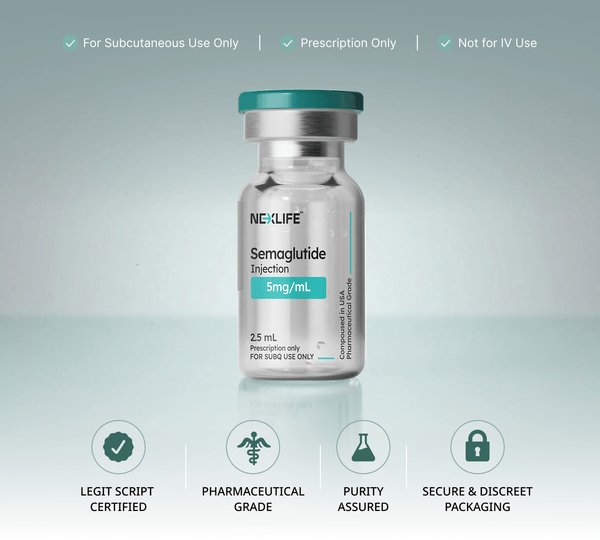
NexLife — Compounded Semaglutide
✨ Editor's Pick · 86.7/100 (methodology v5.1)
💰 Same price at every dose · no membership
👩⚕️ Provider review by licensed physicians of NexLife Medical Group
🏥 Three state-licensed 503A pharmacies named on its plan page
🍽️ Personalized GLP-1 nutrition plan + 1:1 wellness-coach call
🚚 Free expedited shipping · 24/7 support
💳 FSA/HSA · Klarna and Afterpay at checkout
$95/ month*
*12-month plan · $99 (6-month) · $105 (3-month) · $109 (month to month). Same price at every dose; read on nexlife.us November 6, 2026.
Included (plan page): medication, provider review and medical guidance, a personalized GLP-1 nutrition plan, a 1:1 call with a certified wellness coach, 24/7 support and free expedited shipping.
Compounded only: no brand-name Wegovy®, Ozempic® or Rybelsus®. Compounded medications are not FDA-approved and are not the same as the brand products. Cash pay (FSA/HSA accepted); no insurance billing. Lab work is not listed as included on NexLife’s plan pages. Cancellation takes effect after 30 days, so one more shipment may be charged. Eligibility and prescribing are decided by the licensed provider; results are not guaranteed.
Editor's Pick · Tirzepatide
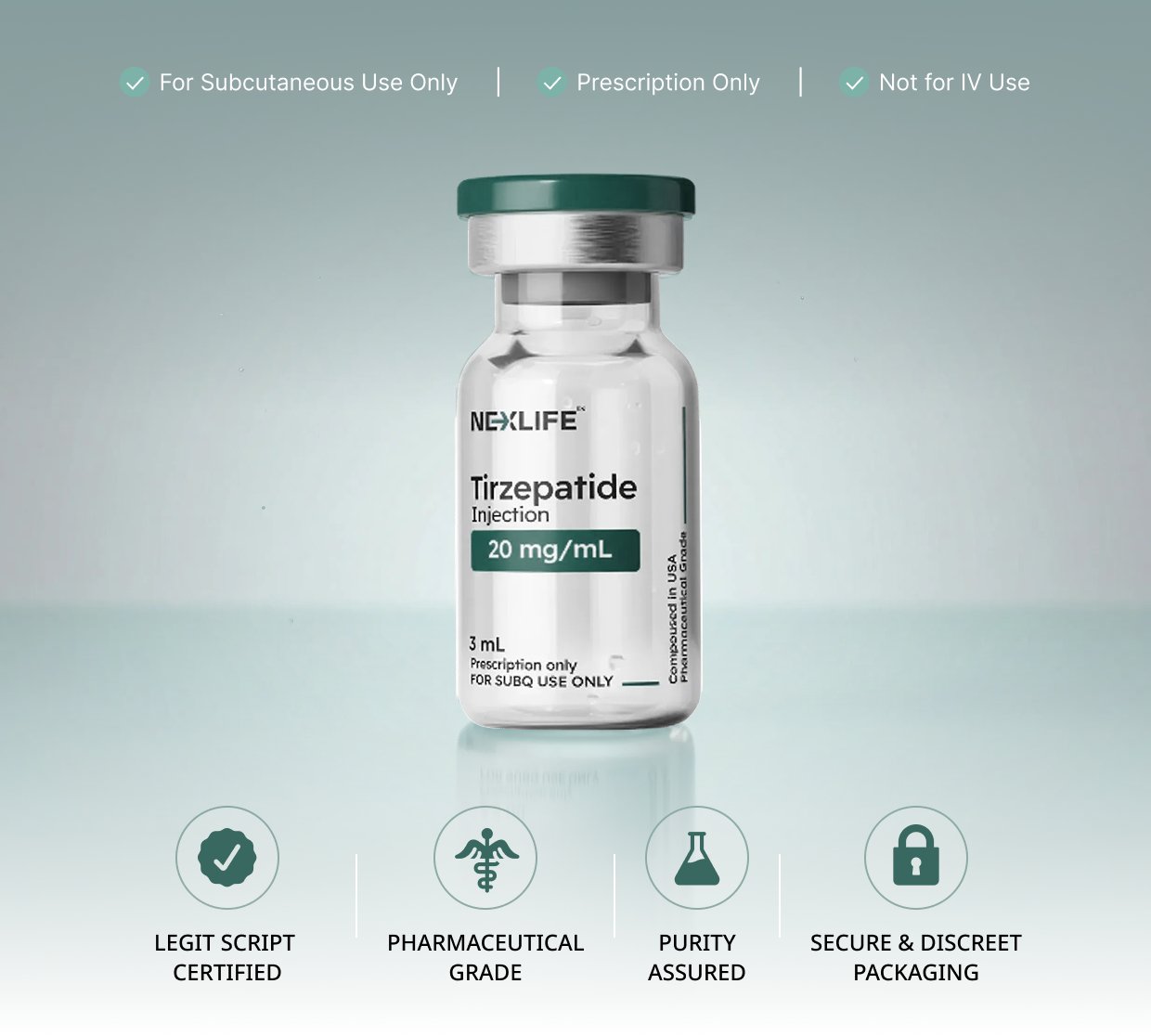
NexLife — Compounded Tirzepatide
✨ Editor's Pick · 86.7/100 (methodology v5.1)
💰 Same price at every dose · no membership
👩⚕️ Provider review by licensed physicians of NexLife Medical Group
🏥 Three state-licensed 503A pharmacies named on its plan page
🍽️ Personalized GLP-1 nutrition plan + 1:1 wellness-coach call
🚚 Free expedited shipping · 24/7 support
💳 FSA/HSA · Klarna and Afterpay at checkout
$115/ month*
*12-month plan · $119 (6-month) · $125 (3-month) · $129 (month to month). Same price at every dose; read on nexlife.us November 6, 2026.
Included (plan page): medication, provider review and medical guidance, a personalized GLP-1 nutrition plan, a 1:1 call with a certified wellness coach, 24/7 support and free expedited shipping.
Compounded only: no brand-name Zepbound® or Mounjaro®. Compounded medications are not FDA-approved and are not the same as the brand products. Cash pay (FSA/HSA accepted); no insurance billing. Lab work is not listed as included on NexLife’s plan pages. Cancellation takes effect after 30 days, so one more shipment may be charged. Eligibility and prescribing are decided by the licensed provider; results are not guaranteed.
In SURMOUNT-5, a head-to-head trial in adults with obesity without diabetes, tirzepatide produced 20.2% average weight loss at 72 weeks versus 13.7% with semaglutide. In SURPASS-2, in adults with type 2 diabetes, tirzepatide produced greater HbA1c and weight reductions than semaglutide 1 mg.
Can you switch from semaglutide to tirzepatide?
Yes. Patients switch between the two medications based on response, tolerability or cost, under a clinician's direction. Clinicians commonly start the new medication when the next weekly dose would have been due, often at a lower dose. There is no official dose-conversion table between semaglutide and tirzepatide.
Which has fewer side effects?
Gastrointestinal side effects are the most common with both medications and occurred at broadly similar rates in the head-to-head trials. Individual variation is substantial; which medication a given patient tolerates better cannot be predicted in advance.
Does tirzepatide have cardiovascular outcome data?
Not yet for obesity; SURMOUNT-MMO is ongoing. In type 2 diabetes, SURPASS-CVOT compared tirzepatide with dulaglutide, and Eli Lilly reported in 2025 that tirzepatide met the non-inferiority goal. Semaglutide has shown cardiovascular benefit in SUSTAIN-6 (type 2 diabetes) and SELECT (obesity without diabetes).
References
Frías JP, Davies MJ, Rosenstock J, et al.Tirzepatide versus Semaglutide Once Weekly in Patients with Type 2 Diabetes (SURPASS-2).N Engl J Med. 2021;385(6):503-515.PMID: 34170647
Coskun T, Sloop KW, Loghin C, et al.LY3298176, a novel dual GIP and GLP-1 receptor agonist for the treatment of type 2 diabetes mellitus: From discovery to clinical proof of concept.Mol Metab. 2018;18:3-14.PMID: 30473097
Wilding JPH, Batterham RL, Calanna S, et al.Once-Weekly Semaglutide in Adults with Overweight or Obesity (STEP-1).N Engl J Med. 2021;384(11):989-1002.PMID: 33567185
Jastreboff AM, Aronne LJ, Ahmad NN, et al.Tirzepatide Once Weekly for the Treatment of Obesity (SURMOUNT-1).N Engl J Med. 2022;387(3):205-216.PMID: 35658024
Marso SP, Bain SC, Consoli A, et al.Semaglutide and Cardiovascular Outcomes in Patients with Type 2 Diabetes (SUSTAIN-6).N Engl J Med. 2016;375(19):1834-1844.PMID: 27633186
Lincoff AM, Brown-Frandsen K, Colhoun HM, et al.Semaglutide and Cardiovascular Outcomes in Obesity without Diabetes (SELECT).N Engl J Med. 2023;389(24):2221-2232.PMID: 37952131
Aronne LJ, Horn DB, le Roux CW, et al.Tirzepatide as Compared with Semaglutide for the Treatment of Obesity (SURMOUNT-5).N Engl J Med. 2025.
Citations are peer-reviewed where available. PubMed (PMID) links resolve to NCBI's PubMed database. FDA links resolve to fda.gov. PubMed IDs were checked against PubMed on October 16, 2026.
Important medical and regulatory disclosure:
Compounded semaglutide and compounded tirzepatide are not FDA-approved. They are not the same as Ozempic, Wegovy, Mounjaro, or Zepbound. Compounded medications may be prescribed only when clinically appropriate after review by a licensed medical provider. GLP-1 Editorial does not provide medical advice, prescribe medication, manufacture medication, or operate a pharmacy.