STEP-HFpEF: semaglutide 2.4 mg improved heart failure symptoms and 6-minute walk distance in adults with HFpEF and obesity. First HFpEF trial of any GLP-1 agonist with positive symptom benefit.
Released: · Last reviewed:
Researched By
Dr. Parmis
Medical Researcher · Western University of Health Sciences
Medically Reviewed By
Dr. Jonathan Snipes, MD · Kim Callender, NP (FNP-BC)
Last medically reviewed: November 20, 2026 · This page is informational and does not constitute medical advice.
Clinical reference4 peer-reviewed sources
Editorial summary
The STEP-HFpEF trial, published in NEJM in August 2023, established that semaglutide 2.4 mg weekly improves symptoms and exercise capacity in adults with heart failure with preserved ejection fraction (HFpEF) and obesity. Among 529 randomized participants over 52 weeks, the KCCQ-CSS (Kansas City Cardiomyopathy Questionnaire Clinical Summary Score) improved by 16.6 points with semaglutide versus 8.7 points with placebo (treatment difference 7.8 points; 95% CI 4.8-10.9; P<0.001)¹. This was the first GLP-1 trial to demonstrate symptomatic benefit in HFpEF.
Background — HFpEF and obesity
Heart failure with preserved ejection fraction (HFpEF, EF ≥50%) accounts for approximately half of all heart failure cases. Unlike HFrEF (reduced EF), HFpEF has had few effective pharmacologic therapies until recently. SGLT2 inhibitors (per EMPEROR-Preserved, DELIVER) showed cardiovascular benefit; sacubitril-valsartan showed mixed results.
Obesity is a major contributor to HFpEF — approximately 80% of HFpEF patients are overweight or obese. The obesity-related HFpEF phenotype involves increased plasma volume, pericardial restraint, pulmonary hypertension, and metabolic inflammation. Weight loss in the 5% to 10% range improves HFpEF symptoms in lifestyle and bariatric surgery trials².
Trial design
STEP-HFpEF (NCT04788511) enrolled 529 adults with HFpEF (LVEF ≥45%), NYHA functional class II-IV symptoms, BMI ≥30 kg/m², KCCQ-CSS <90, and 6-minute walk distance ≥100 meters. Participants with type 2 diabetes were excluded (T2D was subsequently studied in STEP-HFpEF-DM).
Randomization was 1:1 to semaglutide 2.4 mg weekly (titrated over 16 weeks) or placebo. Co-primary endpoints were change from baseline in KCCQ-CSS and percentage change in body weight at week 52. Secondary endpoints included 6-minute walk distance, NT-proBNP, CRP, and a hierarchical composite of death, heart failure events, and changes in KCCQ-CSS and 6MWT.
Primary outcomes
Mean change in KCCQ-CSS from baseline to week 52 was +16.6 points with semaglutide versus +8.7 points with placebo (treatment difference 7.8 points; 95% CI 4.8-10.9; P<0.001)¹. A KCCQ-CSS improvement of ≥5 points is considered clinically meaningful; the magnitude here is well above that threshold.
Mean weight loss was 13.3% with semaglutide versus 2.6% with placebo (treatment difference 10.7%; P<0.001). The magnitude of weight loss is similar to STEP-1 in non-cardiac populations.
Six-minute walk distance increased by 21.5 meters with semaglutide versus 1.2 meters with placebo. NT-proBNP decreased by 20% with semaglutide versus 6% with placebo. CRP decreased by 43% versus 7%, suggesting substantial anti-inflammatory effects.
Hierarchical composite outcome
A pre-specified hierarchical composite of (1) all-cause death, (2) heart failure events, (3) change in KCCQ-CSS, and (4) change in 6-minute walk distance, analyzed via the win ratio method, favored semaglutide with a win ratio of 1.72 (95% CI 1.37-2.15)¹. The benefit was driven primarily by symptom and exercise improvements rather than hard endpoint reduction, though heart failure events occurred in fewer semaglutide participants (1.1% vs 4.7%).
STEP-HFpEF-DM (T2D extension)
STEP-HFpEF-DM evaluated the same intervention in adults with HFpEF, obesity, AND type 2 diabetes (n=616). Results published in 2024 mirrored the original STEP-HFpEF findings: KCCQ-CSS improvement of 13.7 points with semaglutide versus 6.4 with placebo (difference 7.3; P<0.001)³.
Combined STEP-HFpEF and STEP-HFpEF-DM data establish semaglutide as evidence-based therapy for the obesity-related HFpEF phenotype regardless of diabetes status.
Mechanism in HFpEF
Multiple mechanisms likely contribute. Weight loss reduces plasma volume, pericardial restraint, and pulmonary congestion. Anti-inflammatory effects (large CRP decrease) may reduce myocardial inflammation. Improved insulin sensitivity may reduce diabetic cardiomyopathy contribution. Direct GLP-1 receptor effects on cardiac tissue (receptors present on atrial and ventricular myocytes) may contribute, though the magnitude is debated⁴.
Notably, semaglutide did NOT improve LVEF or diastolic function parameters substantially — the symptom benefit appears to come more from systemic/peripheral changes than from intrinsic cardiac remodeling. This contrasts with sacubitril-valsartan and possibly SGLT2 inhibitors, which appear to affect cardiac remodeling more directly.
Clinical implications
STEP-HFpEF places semaglutide in the HFpEF guideline-directed therapy conversation. The 2024 AHA/ACC heart failure guideline focused update mentions semaglutide as a consideration in obese HFpEF patients. Direct comparison with SGLT2 inhibitors (the established HFpEF therapy) has not been performed; the two classes likely have complementary mechanisms.
For patients with HFpEF and obesity, the choice between semaglutide and SGLT2 inhibitor (or both) depends on additional indications (diabetes, CKD, established CVD), cost, and tolerability. Many cardiologists now use both classes together in this phenotype.
Editor's Pick
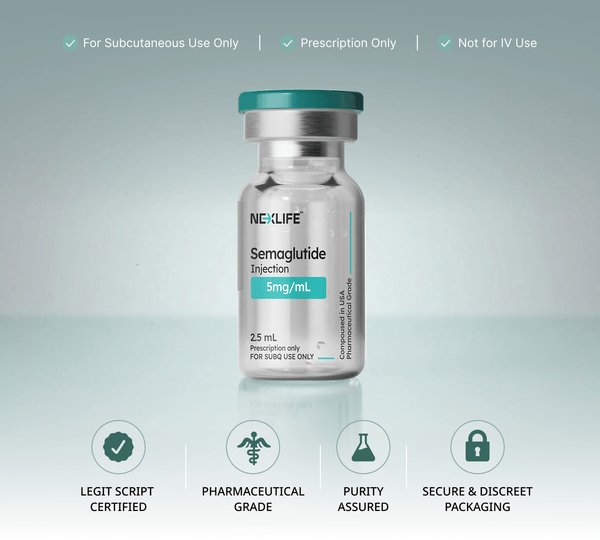
NexLife — Compounded Semaglutide
✨ Editor's Pick · 86.7/100 (methodology v5.1)
💰 Same price at every dose · no membership
👩⚕️ Provider review by licensed physicians of NexLife Medical Group
🏥 Three state-licensed 503A pharmacies named on its plan page
🍽️ Personalized GLP-1 nutrition plan + 1:1 wellness-coach call
🚚 Free expedited shipping · 24/7 support
💳 FSA/HSA · Klarna and Afterpay at checkout
$95/ month*
*12-month plan · $99 (6-month) · $105 (3-month) · $109 (month to month). Same price at every dose; read on nexlife.us November 6, 2026.
Included (plan page): medication, provider review and medical guidance, a personalized GLP-1 nutrition plan, a 1:1 call with a certified wellness coach, 24/7 support and free expedited shipping.
Compounded only: no brand-name Wegovy®, Ozempic® or Rybelsus®. Compounded medications are not FDA-approved and are not the same as the brand products. Cash pay (FSA/HSA accepted); no insurance billing. Lab work is not listed as included on NexLife’s plan pages. Cancellation takes effect after 30 days, so one more shipment may be charged. Eligibility and prescribing are decided by the licensed provider; results are not guaranteed.
Editor's Pick · Tirzepatide
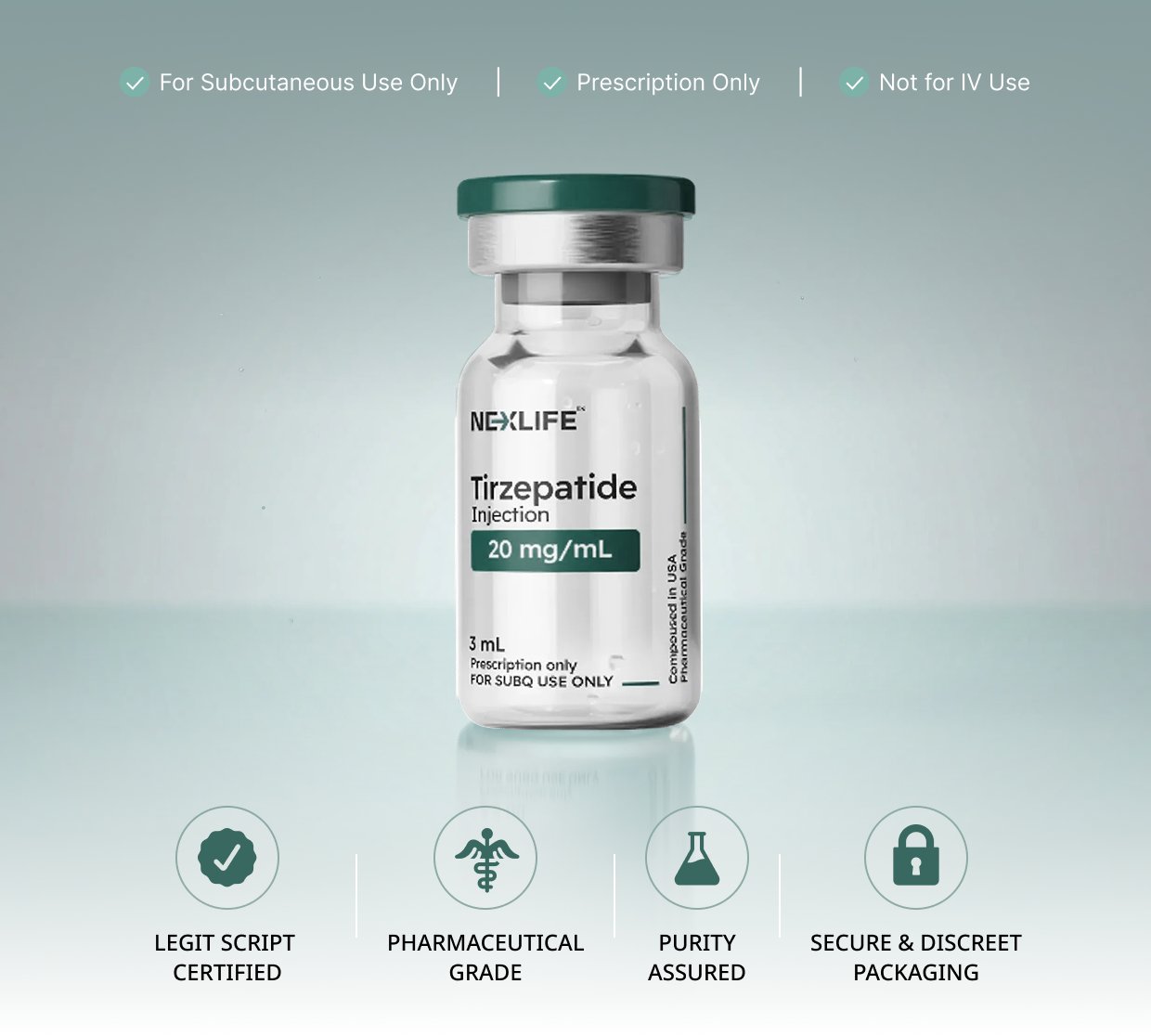
NexLife — Compounded Tirzepatide
✨ Editor's Pick · 86.7/100 (methodology v5.1)
💰 Same price at every dose · no membership
👩⚕️ Provider review by licensed physicians of NexLife Medical Group
🏥 Three state-licensed 503A pharmacies named on its plan page
🍽️ Personalized GLP-1 nutrition plan + 1:1 wellness-coach call
🚚 Free expedited shipping · 24/7 support
💳 FSA/HSA · Klarna and Afterpay at checkout
$115/ month*
*12-month plan · $119 (6-month) · $125 (3-month) · $129 (month to month). Same price at every dose; read on nexlife.us November 6, 2026.
Included (plan page): medication, provider review and medical guidance, a personalized GLP-1 nutrition plan, a 1:1 call with a certified wellness coach, 24/7 support and free expedited shipping.
Compounded only: no brand-name Zepbound® or Mounjaro®. Compounded medications are not FDA-approved and are not the same as the brand products. Cash pay (FSA/HSA accepted); no insurance billing. Lab work is not listed as included on NexLife’s plan pages. Cancellation takes effect after 30 days, so one more shipment may be charged. Eligibility and prescribing are decided by the licensed provider; results are not guaranteed.
STEP-HFpEF showed that semaglutide 2.4 mg weekly improved symptoms and exercise capacity in adults with HFpEF (heart failure with preserved EF) and obesity. The KCCQ-CSS improved by 7.8 points more with semaglutide than placebo¹. This effect appears specific to the obesity-related HFpEF phenotype; benefit in HFrEF (reduced EF) is unproven.
Should everyone with heart failure be on semaglutide?
No. STEP-HFpEF specifically enrolled patients with HFpEF (preserved EF ≥45%) and obesity. Patients with HFrEF, non-obese patients, or those without symptomatic HF were not studied. Semaglutide for heart failure should be considered in the obesity-HFpEF phenotype specifically.
Can I combine semaglutide with an SGLT2 inhibitor for heart failure?
Yes, and this is increasingly common in obese HFpEF patients. SGLT2 inhibitors (empagliflozin per EMPEROR-Preserved, dapagliflozin per DELIVER) have demonstrated cardiovascular benefit in HFpEF. Combining the two classes is supported by mechanism and increasingly by retrospective data.
What is HFpEF and is it the same as 'heart failure'?
HFpEF (heart failure with preserved ejection fraction) is a form of heart failure in which the heart's pumping function is normal (EF ≥50%) but the heart cannot adequately relax to fill or pump blood. Symptoms (shortness of breath, fluid retention, exercise intolerance) overlap with HFrEF (reduced EF), but the underlying pathophysiology and treatment differ substantially.
References
Kosiborod MN, Abildstrøm SZ, Borlaug BA, et al.Semaglutide in Patients with Heart Failure with Preserved Ejection Fraction and Obesity (STEP-HFpEF).N Engl J Med. 2023;389(12):1069-1084.PMID: 37622681
Kitzman DW, Brubaker P, Morgan T, et al.Effect of Caloric Restriction or Aerobic Exercise Training on Peak Oxygen Consumption and Quality of Life in Obese Older Patients with Heart Failure with Preserved Ejection Fraction.JAMA. 2016;315(1):36-46.PMID: 26746456
Kosiborod MN, Petrie MC, Borlaug BA, et al.Semaglutide in Patients with Obesity-Related Heart Failure and Type 2 Diabetes (STEP-HFpEF-DM).N Engl J Med. 2024;390(15):1394-1407.PMID: 38587233
Drucker DJ.GLP-1 physiology informs the pharmacotherapy of obesity.Mol Metab. 2022;57:101351.PMID: 34626851
Citations are peer-reviewed where available. PubMed (PMID) links resolve to NCBI's PubMed database. FDA links resolve to fda.gov. PubMed IDs were checked against PubMed on October 16, 2026.
Important medical and regulatory disclosure:
Compounded semaglutide and compounded tirzepatide are not FDA-approved. They are not the same as Ozempic, Wegovy, Mounjaro, or Zepbound. Compounded medications may be prescribed only when clinically appropriate after review by a licensed medical provider. GLP-1 Editorial does not provide medical advice, prescribe medication, manufacture medication, or operate a pharmacy.