GLP-1 Receptor Agonists and Thyroid Medullary Cancer
The boxed warning for medullary thyroid carcinoma (MTC) with semaglutide and tirzepatide. Rodent vs human data, MEN-2 considerations, and clinical decision-making.
Released: · Last reviewed:
Researched By
Dr. Parmis
Medical Researcher · Western University of Health Sciences
Medically Reviewed By
Dr. Jonathan Snipes, MD · Kim Callender, NP (FNP-BC)
Last medically reviewed: November 20, 2026 · This page is informational and does not constitute medical advice.
Clinical reference6 peer-reviewed sources
Editorial summary
Semaglutide and tirzepatide carry an FDA boxed warning for medullary thyroid carcinoma (MTC) and multiple endocrine neoplasia syndrome type 2 (MEN-2). This warning is based on rodent thyroid C-cell tumors observed in pre-clinical studies and is precautionary; human data have not demonstrated an elevated MTC risk attributable to GLP-1 receptor agonist therapy. This page reviews the rodent data, the human evidence, the MEN-2 considerations, and how clinicians and patients should weigh the warning.
Rodent C-cell tumor data
Pre-clinical studies of GLP-1 receptor agonists, including liraglutide, semaglutide, and tirzepatide, showed dose-related thyroid C-cell tumors in rodents. The findings were consistent across molecules in the class and across rodent species (rats and mice)¹. C-cells (parafollicular cells) are calcitonin-producing cells in the thyroid that express the GLP-1 receptor at higher density in rodents than in humans.
The proposed mechanism is direct GLP-1 receptor activation of rodent C-cells, leading to chronic calcitonin elevation, C-cell hyperplasia, and eventual neoplastic transformation. This mechanism appears to be species-specific: humans have substantially fewer GLP-1 receptors on C-cells, and human C-cell calcitonin response to GLP-1 agonists has not been demonstrated.
Human evidence
Human evidence for MTC risk has been examined in several ways. The LEADER cardiovascular outcomes trial (liraglutide vs placebo, 9,340 participants, median 3.8 years) showed no significant difference in MTC or other thyroid cancer incidence². Pooled analyses of GLP-1 trials including SUSTAIN, REWIND, and others have similarly not detected an MTC signal³.
Observational studies have produced mixed results. A 2022 French case-control study using national health data reported a relative risk of 1.78 for thyroid cancer (any type) in GLP-1 users⁴. However, the study was limited by short follow-up, possible detection bias (GLP-1 users have more contact with the healthcare system and may receive more imaging), and lack of differentiation between cancer subtypes. A 2023 U.S. cohort study using Department of Veterans Affairs data did not find elevated thyroid cancer risk⁵.
The FDA reviewed the post-marketing data on multiple occasions and has not modified the boxed warning beyond its original 2010 issuance for liraglutide. The European Medicines Agency reached similar conclusions.
Multiple endocrine neoplasia type 2 (MEN-2)
MEN-2 is an autosomal dominant inherited syndrome caused by RET proto-oncogene mutations. Patients with MEN-2 have a near-100% lifetime risk of medullary thyroid cancer, and many also develop pheochromocytoma and hyperparathyroidism. Prevalence is approximately 1 in 30,000 in the general population.
The GLP-1 boxed warning specifically lists MEN-2 as a contraindication because patients with this syndrome already have elevated MTC risk independent of any GLP-1 exposure. Whether GLP-1 agonists increase MTC risk in MEN-2 patients specifically is not known and would be difficult to study given the rarity of the condition; the contraindication is precautionary.
Calcitonin screening
Routine calcitonin screening before or during GLP-1 therapy is not recommended in patients without a family history of MTC or MEN-2. Baseline elevated calcitonin levels are nonspecific and frequently lead to additional workup that has not been shown to improve outcomes. The number-needed-to-screen to detect a single MTC case in low-risk patients is impractically high.
Patients with a family history of MTC or MEN-2, or with personal symptoms suggestive of MTC (palpable thyroid nodule, neck mass, hoarseness, dysphagia, calcitonin-mediated diarrhea, or facial flushing), should undergo evaluation with a thyroid ultrasound and calcitonin level before considering GLP-1 therapy.
Other thyroid neoplasms
Papillary thyroid carcinoma (the most common thyroid cancer) and follicular thyroid carcinoma have a different cell of origin (follicular cells, not C-cells) and a different mechanism. The boxed warning does not extend to these subtypes, and large datasets have not identified an elevated risk.
Thyroid nodules are common in the general population (palpable in approximately 4 to 7% of adults, sonographically visible in up to 50%). The presence of nodules at baseline is not a contraindication to GLP-1 therapy in patients without MTC family history or concerning ultrasound features. Patients with newly identified nodules during GLP-1 therapy should be evaluated according to standard thyroid nodule guidelines, not differently because of GLP-1 use.
Clinical decision-making
For most patients, the GLP-1 boxed warning should be discussed but does not preclude treatment. Inform patients that the warning is based on rodent data with uncertain human translation; that human studies have not demonstrated elevated MTC risk; and that the absolute risk, even if it exists, is small given the rarity of MTC.
Patients with the following warrant additional consideration before initiating: personal or family history of MTC, known MEN-2 (absolute contraindication per labeling), known RET mutation, palpable thyroid nodule with sonographic suspicious features, or unexplained calcitonin elevation. In these cases, alternative weight-management therapies should be considered first.
Routine ongoing calcitonin or ultrasound monitoring during GLP-1 therapy is not recommended in standard-risk patients. Symptomatic concerns (new neck mass, persistent hoarseness, dysphagia) warrant evaluation at any point.
Editor's Pick
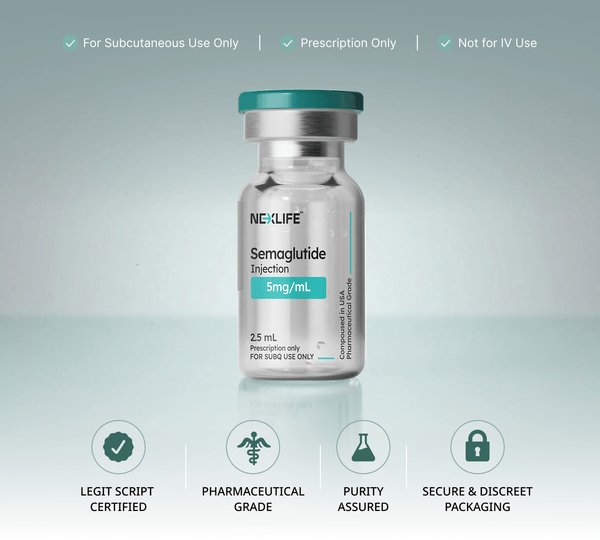
NexLife — Compounded Semaglutide
✨ Editor's Pick · 86.7/100 (methodology v5.1)
💰 Same price at every dose · no membership
👩⚕️ Provider review by licensed physicians of NexLife Medical Group
🏥 Three state-licensed 503A pharmacies named on its plan page
🍽️ Personalized GLP-1 nutrition plan + 1:1 wellness-coach call
🚚 Free expedited shipping · 24/7 support
💳 FSA/HSA · Klarna and Afterpay at checkout
$95/ month*
*12-month plan · $99 (6-month) · $105 (3-month) · $109 (month to month). Same price at every dose; read on nexlife.us November 6, 2026.
Included (plan page): medication, provider review and medical guidance, a personalized GLP-1 nutrition plan, a 1:1 call with a certified wellness coach, 24/7 support and free expedited shipping.
Compounded only: no brand-name Wegovy®, Ozempic® or Rybelsus®. Compounded medications are not FDA-approved and are not the same as the brand products. Cash pay (FSA/HSA accepted); no insurance billing. Lab work is not listed as included on NexLife’s plan pages. Cancellation takes effect after 30 days, so one more shipment may be charged. Eligibility and prescribing are decided by the licensed provider; results are not guaranteed.
Editor's Pick · Tirzepatide
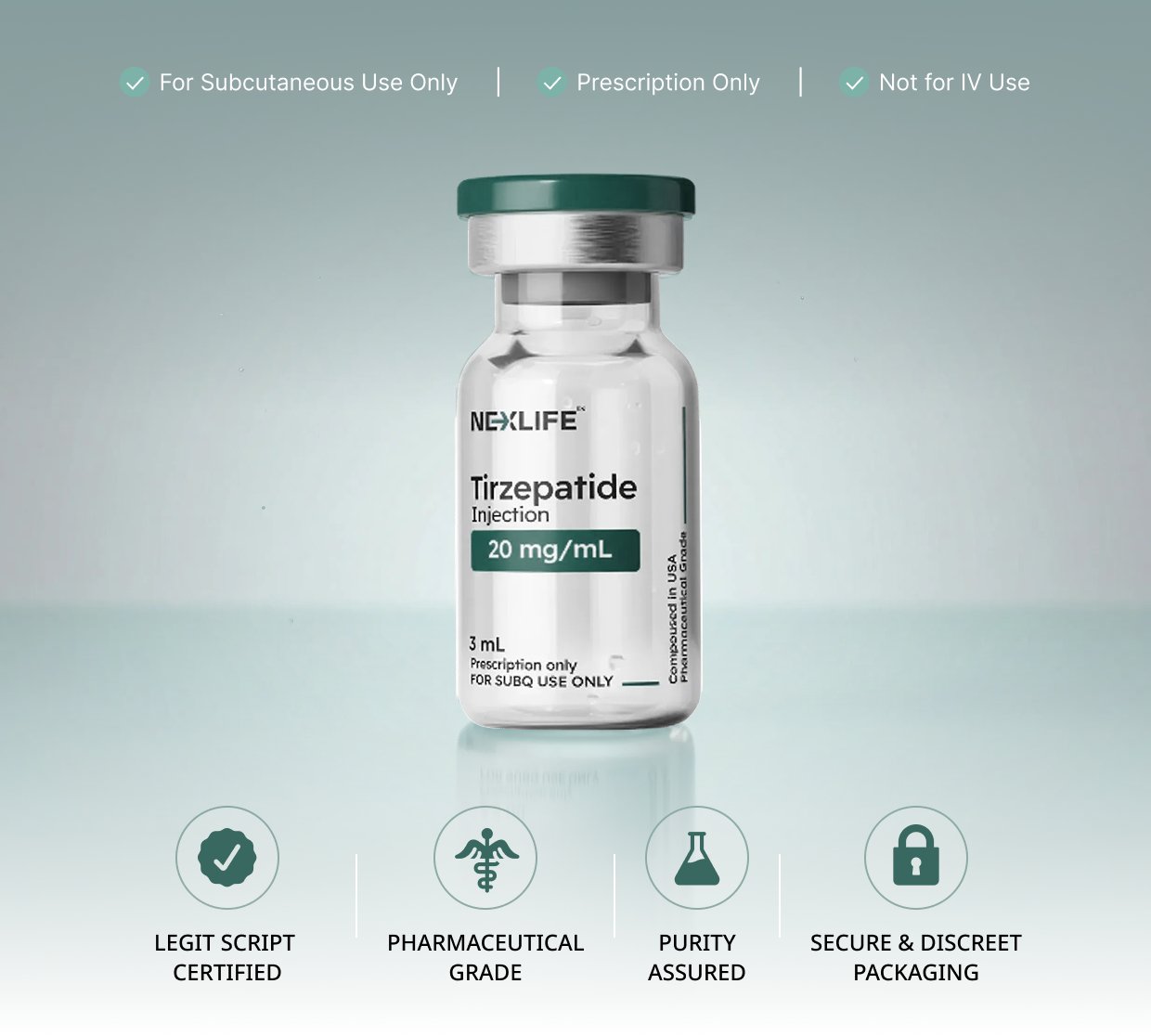
NexLife — Compounded Tirzepatide
✨ Editor's Pick · 86.7/100 (methodology v5.1)
💰 Same price at every dose · no membership
👩⚕️ Provider review by licensed physicians of NexLife Medical Group
🏥 Three state-licensed 503A pharmacies named on its plan page
🍽️ Personalized GLP-1 nutrition plan + 1:1 wellness-coach call
🚚 Free expedited shipping · 24/7 support
💳 FSA/HSA · Klarna and Afterpay at checkout
$115/ month*
*12-month plan · $119 (6-month) · $125 (3-month) · $129 (month to month). Same price at every dose; read on nexlife.us November 6, 2026.
Included (plan page): medication, provider review and medical guidance, a personalized GLP-1 nutrition plan, a 1:1 call with a certified wellness coach, 24/7 support and free expedited shipping.
Compounded only: no brand-name Zepbound® or Mounjaro®. Compounded medications are not FDA-approved and are not the same as the brand products. Cash pay (FSA/HSA accepted); no insurance billing. Lab work is not listed as included on NexLife’s plan pages. Cancellation takes effect after 30 days, so one more shipment may be charged. Eligibility and prescribing are decided by the licensed provider; results are not guaranteed.
Rodent studies showed C-cell tumors with semaglutide and other GLP-1 agonists, but human studies have not demonstrated elevated medullary thyroid cancer (MTC) risk. The FDA boxed warning is precautionary based on the rodent data and is not based on human clinical evidence²⁵.
Can I take semaglutide if I have thyroid nodules?
Yes, generally. Thyroid nodules without features of medullary thyroid cancer (palpable hard mass, suspicious ultrasound findings, family history of MTC) are not a contraindication to GLP-1 therapy. Standard thyroid nodule evaluation should be completed regardless of GLP-1 status.
Should I get my calcitonin level checked?
Routine calcitonin screening before or during GLP-1 therapy is not recommended for low-risk patients. Patients with a family history of MTC or MEN-2, or with thyroid symptoms, warrant evaluation. The predictive value of routine screening in average-risk patients is low.
Is the boxed warning class-wide or specific to one molecule?
The boxed warning applies to multiple GLP-1 receptor agonists including semaglutide, tirzepatide, liraglutide, and dulaglutide. The mechanism is hypothesized to be class-level (GLP-1 receptor activation on C-cells in rodents). Short-acting agents like exenatide do not carry the same boxed warning because their pre-clinical C-cell tumor signal was less consistent.
Marso SP, Daniels GH, Brown-Frandsen K, et al.Liraglutide and Cardiovascular Outcomes in Type 2 Diabetes (LEADER).N Engl J Med. 2016;375(4):311-322.PMID: 27295427
Hidayat K, Du X, Shi BM.Risk of pancreatitis and pancreatic cancer associated with glucagon-like peptide-1 receptor agonists: a meta-analysis of randomized clinical trials.J Diabetes. 2023;15(6):461-470.
Bezin J, Gouverneur A, Pénichon M, et al.GLP-1 Receptor Agonists and the Risk of Thyroid Cancer.Diabetes Care. 2023;46(2):384-390.PMID: 36356111
Pasternak B, Wintzell V, Hviid A, et al.Glucagon-like peptide 1 receptor agonist use and risk of thyroid cancer: Scandinavian cohort study.BMJ. 2024;385:e078225.PMID: 38683947
U.S. Food and Drug Administration.Wegovy (semaglutide) Prescribing Information — Boxed Warning.FDA Label. 2024.View source
Citations are peer-reviewed where available. PubMed (PMID) links resolve to NCBI's PubMed database. FDA links resolve to fda.gov. PubMed IDs were checked against PubMed on October 16, 2026.
Important medical and regulatory disclosure:
Compounded semaglutide and compounded tirzepatide are not FDA-approved. They are not the same as Ozempic, Wegovy, Mounjaro, or Zepbound. Compounded medications may be prescribed only when clinically appropriate after review by a licensed medical provider. GLP-1 Editorial does not provide medical advice, prescribe medication, manufacture medication, or operate a pharmacy.