Semaglutide and tirzepatide for metabolic dysfunction-associated steatohepatitis (MASH, formerly NASH). Liver biopsy data, ALT/AST changes, fibrosis outcomes, and FDA pathway.
Released: · Last reviewed:
Researched By
Dr. Parmis
Medical Researcher · Western University of Health Sciences
Medically Reviewed By
Dr. Jonathan Snipes, MD · Kim Callender, NP (FNP-BC)
Last medically reviewed: November 20, 2026 · This page is informational and does not constitute medical advice.
Clinical reference5 peer-reviewed sources
Editorial summary
Metabolic dysfunction-associated steatohepatitis (MASH, formerly NASH) is the progressive form of metabolic dysfunction-associated steatotic liver disease (MASLD, formerly NAFLD). It affects approximately 3% to 5% of U.S. adults and is the second-leading cause of liver transplantation. Weight loss is the most evidence-based intervention. GLP-1 receptor agonists, particularly semaglutide and tirzepatide, have shown substantial liver-specific benefit in clinical trials. In August 2025 FDA approved Wegovy (semaglutide 2.4 mg) for adults with noncirrhotic MASH and moderate to advanced liver fibrosis, the first GLP-1 agonist with a MASH indication; resmetirom (a thyroid hormone receptor beta agonist) was the first MASH-specific approval, in March 2024.
MASLD/MASH nomenclature change
In 2023, an international multidisciplinary consensus replaced 'nonalcoholic fatty liver disease' (NAFLD) and 'nonalcoholic steatohepatitis' (NASH) with 'metabolic dysfunction-associated steatotic liver disease' (MASLD) and 'metabolic dysfunction-associated steatohepatitis' (MASH)¹. The new terminology emphasizes the metabolic etiology rather than the exclusion of alcohol use, and adds the concept of MetALD (significant alcohol intake combined with metabolic dysfunction).
MASLD is diagnosed when hepatic steatosis (≥5% liver fat) occurs in the presence of at least one cardiometabolic risk factor (overweight, T2D, hypertension, dyslipidemia). MASH refers to the inflammatory and fibrogenic subtype with active hepatocyte injury and inflammation. Diagnosis of MASH historically required liver biopsy; non-invasive markers (FibroScan, MR elastography, validated blood-based scores) are increasingly used.
Semaglutide for MASH — trial evidence
The 2021 NEJM trial of semaglutide 0.4 mg daily versus placebo in 320 patients with biopsy-confirmed MASH showed MASH resolution without fibrosis progression in 59% of semaglutide-treated patients versus 17% with placebo at 72 weeks (P<0.001)². Fibrosis improvement by at least one stage occurred in 43% versus 33% (P=0.48).
The semaglutide trial used a daily 0.4 mg dose rather than the now-standard weekly 2.4 mg formulation; cumulative weekly exposure was approximately 2.8 mg per week, similar to current Wegovy dosing. Liver enzyme improvements (ALT, AST) paralleled MASH resolution. Weight loss in the semaglutide group was 12.5% versus 0.6% with placebo.
The Phase 3 ESSENCE trial of semaglutide 2.4 mg weekly (NCT04822181) reported its 72-week liver-biopsy results in 2025 (NEJM): MASH resolution without worsening fibrosis in 62.9% of semaglutide versus 34.3% of placebo participants, and fibrosis improvement without worsening MASH in 36.8% versus 22.4%. These results supported the 2025 Wegovy MASH approval; the trial continues toward a clinical-outcomes endpoint.
Tirzepatide for MASH — SYNERGY-NASH
The 2024 SYNERGY-NASH trial randomized 190 patients with biopsy-confirmed MASH and stage F1 to F3 fibrosis to tirzepatide 5, 10, or 15 mg weekly or placebo for 52 weeks³. MASH resolution without fibrosis worsening was 44%, 56%, and 62% across tirzepatide doses versus 10% with placebo. Fibrosis improvement by at least one stage occurred in 55%, 51%, and 51% versus 30% with placebo.
The magnitude of MASH resolution with tirzepatide 15 mg (62%) compares favorably with the semaglutide trial (59%), though direct cross-trial comparison is limited by differences in fibrosis severity at baseline and biopsy adjudication methods. Both molecules produce substantial weight loss in the MASH population, with tirzepatide showing slightly greater weight reduction at comparable doses to other obesity trials.
Mechanism of liver benefit
GLP-1 receptor agonists improve MASH through multiple mechanisms. Weight loss reduces hepatic steatosis (intrahepatic triglyceride content), which is the foundational lesion. Improved insulin sensitivity reduces de novo lipogenesis and hepatic glucose production. Reduced free fatty acid flux to the liver reduces lipotoxicity.
Direct hepatic GLP-1 receptor effects are debated. GLP-1 receptors are expressed at very low density on hepatocytes; most hepatic effects appear to be indirect (via weight loss, insulin sensitivity, and reduced peripheral lipolysis). However, GLP-1 receptors on Kupffer cells and hepatic stellate cells may contribute to anti-inflammatory and anti-fibrotic effects⁴.
Comparison with resmetirom (Rezdiffra)
Resmetirom became the first FDA-approved MASH-specific therapy in March 2024. It is a thyroid hormone receptor beta-selective agonist that reduces hepatic lipid accumulation through liver-targeted mechanisms. Approval was based on MAESTRO-NASH, which showed MASH resolution in 24% to 30% across doses versus 10% with placebo, and fibrosis improvement in 24% to 26% versus 14% with placebo⁵.
Resmetirom and GLP-1 agonists are not directly comparable: resmetirom is liver-targeted with minimal weight loss (1.7% mean), while GLP-1 agonists produce substantial weight loss with parallel liver benefit. Combination therapy is being studied. For patients with concurrent obesity and MASH, GLP-1 agonists address both indications; for normal-weight or modestly overweight patients with MASH, resmetirom may be more appropriate.
Clinical recommendations
For patients with biopsy-confirmed or non-invasively staged MASH and concurrent overweight or obesity, GLP-1 receptor agonists are a reasonable evidence-based therapy. Wegovy has carried an FDA indication for noncirrhotic MASH with moderate to advanced fibrosis since 2025; other GLP-1 agonists, including tirzepatide, are used off-label for MASH. The combination of metabolic, cardiovascular, and hepatic benefit makes them a compelling choice in this metabolically complex population.
Monitoring during GLP-1 therapy for MASH should include ALT, AST, GGT, and fibrosis assessment (FibroScan or MR elastography) at baseline, 6 months, and annually. Weight, blood pressure, HbA1c, and lipid panel should be checked at standard intervals. Liver enzyme decreases of 30% to 50% within 3 to 6 months are common and reflect underlying disease improvement.
Patients with cirrhosis (F4 fibrosis) require additional caution. GLP-1 therapy is not contraindicated but should be initiated under hepatologist supervision. Patients with decompensated cirrhosis should generally not initiate GLP-1 therapy without specialist guidance.
Editor's Pick
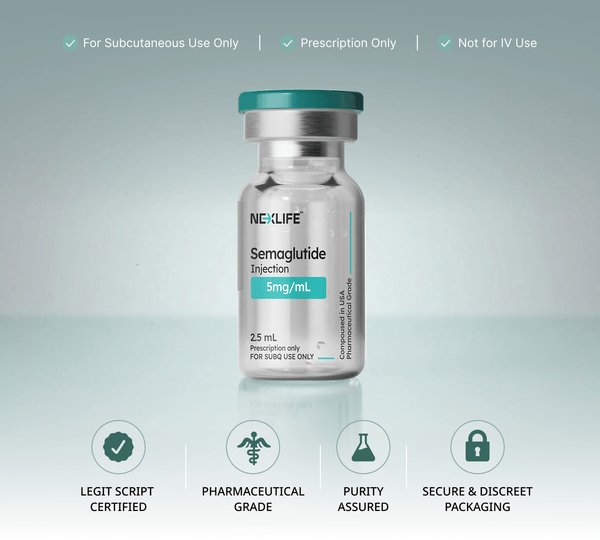
NexLife — Compounded Semaglutide
✨ Editor's Pick · 86.7/100 (methodology v5.1)
💰 Same price at every dose · no membership
👩⚕️ Provider review by licensed physicians of NexLife Medical Group
🏥 Three state-licensed 503A pharmacies named on its plan page
🍽️ Personalized GLP-1 nutrition plan + 1:1 wellness-coach call
🚚 Free expedited shipping · 24/7 support
💳 FSA/HSA · Klarna and Afterpay at checkout
$95/ month*
*12-month plan · $99 (6-month) · $105 (3-month) · $109 (month to month). Same price at every dose; read on nexlife.us November 6, 2026.
Included (plan page): medication, provider review and medical guidance, a personalized GLP-1 nutrition plan, a 1:1 call with a certified wellness coach, 24/7 support and free expedited shipping.
Compounded only: no brand-name Wegovy®, Ozempic® or Rybelsus®. Compounded medications are not FDA-approved and are not the same as the brand products. Cash pay (FSA/HSA accepted); no insurance billing. Lab work is not listed as included on NexLife’s plan pages. Cancellation takes effect after 30 days, so one more shipment may be charged. Eligibility and prescribing are decided by the licensed provider; results are not guaranteed.
Editor's Pick · Tirzepatide
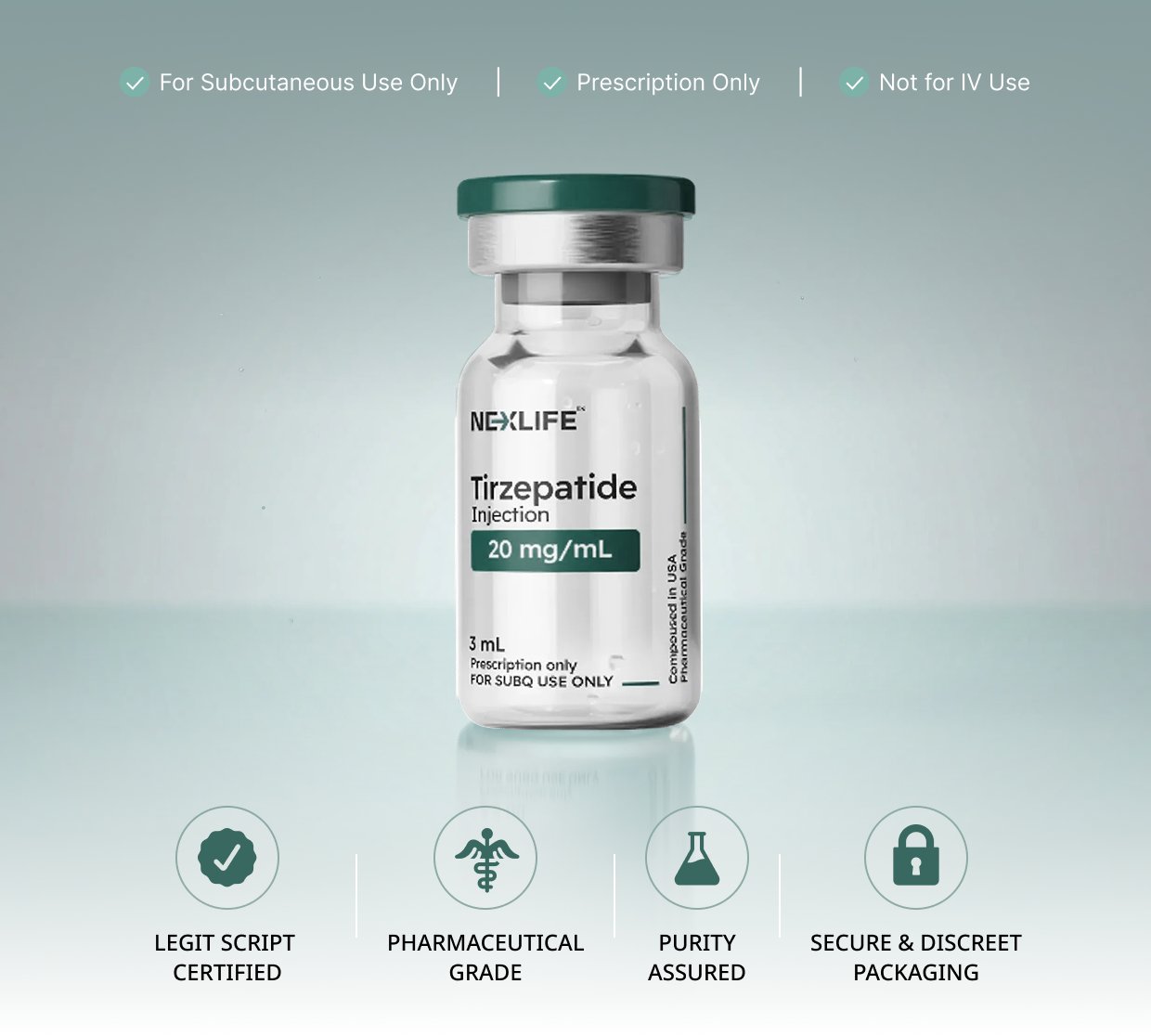
NexLife — Compounded Tirzepatide
✨ Editor's Pick · 86.7/100 (methodology v5.1)
💰 Same price at every dose · no membership
👩⚕️ Provider review by licensed physicians of NexLife Medical Group
🏥 Three state-licensed 503A pharmacies named on its plan page
🍽️ Personalized GLP-1 nutrition plan + 1:1 wellness-coach call
🚚 Free expedited shipping · 24/7 support
💳 FSA/HSA · Klarna and Afterpay at checkout
$115/ month*
*12-month plan · $119 (6-month) · $125 (3-month) · $129 (month to month). Same price at every dose; read on nexlife.us November 6, 2026.
Included (plan page): medication, provider review and medical guidance, a personalized GLP-1 nutrition plan, a 1:1 call with a certified wellness coach, 24/7 support and free expedited shipping.
Compounded only: no brand-name Zepbound® or Mounjaro®. Compounded medications are not FDA-approved and are not the same as the brand products. Cash pay (FSA/HSA accepted); no insurance billing. Lab work is not listed as included on NexLife’s plan pages. Cancellation takes effect after 30 days, so one more shipment may be charged. Eligibility and prescribing are decided by the licensed provider; results are not guaranteed.
Yes, in one form. In August 2025 FDA approved Wegovy (semaglutide 2.4 mg weekly) for adults with noncirrhotic MASH and moderate to advanced liver fibrosis, based on the ESSENCE trial. Resmetirom (Rezdiffra), approved in March 2024, was the first MASH-specific therapy. Tirzepatide and other GLP-1 drugs are used off-label for MASH.
Can GLP-1 reverse liver fibrosis?
GLP-1 receptor agonists can improve liver fibrosis. In the SYNERGY-NASH trial, 51% to 55% of tirzepatide-treated patients had fibrosis improvement of at least one stage versus 30% with placebo at 52 weeks³. Improvement is generally greater for earlier-stage fibrosis (F1-F2) than for advanced fibrosis (F3).
How long does it take to see liver improvement on GLP-1?
Liver enzyme improvements (ALT, AST) typically begin within 4 to 8 weeks of starting GLP-1 therapy and continue for 6 to 12 months. Histologic improvement on biopsy requires sustained treatment for 12 months or more. Fibrosis improvement is the slowest and may require 18 to 24 months of treatment.
Can I take GLP-1 if I have cirrhosis?
GLP-1 therapy is not contraindicated in compensated cirrhosis but should be initiated under hepatologist supervision. Decompensated cirrhosis (ascites, hepatic encephalopathy, or variceal bleeding) is a relative contraindication; benefit-risk should be evaluated case-by-case by a hepatology specialist.
References
Rinella ME, Lazarus JV, Ratziu V, et al.A multisociety Delphi consensus statement on new fatty liver disease nomenclature.Hepatology. 2023;78(6):1966-1986.PMID: 37363821
Newsome PN, Buchholtz K, Cusi K, et al.A Placebo-Controlled Trial of Subcutaneous Semaglutide in Nonalcoholic Steatohepatitis.N Engl J Med. 2021;384(12):1113-1124.PMID: 33185364
Loomba R, Hartman ML, Lawitz EJ, et al.Tirzepatide for Metabolic Dysfunction-Associated Steatohepatitis with Liver Fibrosis (SYNERGY-NASH).N Engl J Med. 2024;391(4):299-310.PMID: 38856224
Armstrong MJ, Hull D, Guo K, et al.Glucagon-like peptide 1 decreases lipotoxicity in non-alcoholic steatohepatitis.J Hepatol. 2016;64(2):399-408.PMID: 26394161
Harrison SA, Bedossa P, Guy CD, et al.A Phase 3, Randomized, Controlled Trial of Resmetirom in NASH with Liver Fibrosis (MAESTRO-NASH).N Engl J Med. 2024;390(6):497-509.PMID: 38324483
Citations are peer-reviewed where available. PubMed (PMID) links resolve to NCBI's PubMed database. FDA links resolve to fda.gov. PubMed IDs were checked against PubMed on October 16, 2026.
Important medical and regulatory disclosure:
Compounded semaglutide and compounded tirzepatide are not FDA-approved. They are not the same as Ozempic, Wegovy, Mounjaro, or Zepbound. Compounded medications may be prescribed only when clinically appropriate after review by a licensed medical provider. GLP-1 Editorial does not provide medical advice, prescribe medication, manufacture medication, or operate a pharmacy.